Every customer who walks into our showroom with an empty basement or bonus room asks some version of the same question: what should actually go in it? Picking the best arcade games for a home game room isn’t about grabbing whatever looks good on Instagram — it’s about matching the game to your square footage, your electrical setup, and the people who’ll actually be playing.
We’ve delivered and installed arcade equipment in the Delaware Valley for over 40 years, and the rooms that get used every week look different from the rooms that turn into storage. The difference almost always comes down to planning before you buy, not the specific brand of cabinet you chose.
This guide walks through how to think about space, game type, and what to check before you commit — so the games you bring home actually earn their floor space.
Finding the Best Arcade Games for a Home Game Room Starts with Your Space
Before you look at a single cabinet, measure the room. Not just the footprint — the doorways, the stairwell turns, and the ceiling height too. A standard upright arcade cabinet runs close to 6 feet tall and needs clearance to tip through a doorway at an angle; a pool table or shuffleboard needs a swing radius around it for cues and sliders. We’ve had deliveries stall at the front door because nobody measured the hallway turn first.
As a rule of thumb:
- Under 150 sq ft: stick to one or two compact pieces — a single multicade cabinet, a dartboard, or a tabletop game — rather than trying to cram in a full lineup.
- 150–300 sq ft: you can usually fit a full-size arcade cabinet or two, plus a smaller game like skee-ball or foosball along a wall.
- 300+ sq ft: this is where a real game room lineup makes sense — multiple cabinets, a pool table, and a bar area without anything feeling shoehorned in.
When homeowners ask us what the best arcade games for a home game room actually are, we always start with the tape measure, not the game list. The right games for a 12×14 den and the right games for a finished 800 sq ft basement aren’t the same list. Once you’ve got your square footage figured out, our arcade games page is a good place to start browsing by size and style.
Match the Game to How Your Family Actually Plays
Once you know what fits, the next question is who’s using the room and how. A cabinet that’s perfect for one adult reliving Galaga isn’t the same choice as something four kids and their friends can play at once.
Classic Multicade Cabinets
A multicade — one cabinet loaded with dozens or hundreds of classic titles — is usually the best single-purchase option if you want variety without buying five separate machines. They’re single-player or two-player, work well in almost any size room, and don’t need much beyond a standard outlet. Good for households where everyone has a different favorite game and nobody wants to compromise.
Skee-Ball Deserves a Second Look
Skee-ball gets overlooked because people associate it with boardwalks, but a home-size skee-ball lane is one of the easiest games to get right for family use — no learning curve, works for a 6-year-old and a grandparent, and holds up to heavy rotation better than most cabinets. It also takes up a defined footprint you can plan around, which makes it easier to lay out the rest of the room. We wrote a longer breakdown of what to look for in a home-size unit in our piece on skee-ball for the home, if you want the details on sizing and features.
Pinball and Air Hockey for Head-to-Head Play
If the room is more about friendly competition than solo nostalgia, pinball and air hockey both reward head-to-head play in a way multicades don’t. Pinball has a steeper learning curve but more replay depth for adults; air hockey is faster to pick up and works well for mixed-age groups. Either one is a strong second machine once you’ve settled on a primary cabinet.
What to Check Before You Buy
A few practical items get skipped in the excitement of picking games, and they matter more than people expect:
- Power draw and outlet placement. Most cabinets run on a standard 15-amp circuit, but running two or three off the same outlet can trip a breaker mid-game. Plan your outlet layout before the games arrive, not after.
- Floor load, especially in finished basements. Full-size cabinets and skee-ball lanes are heavier than they look. If you’re on a suspended floor rather than a slab, it’s worth confirming it can handle the weight where you plan to place them.
- New vs. used. Used cabinets can be a good value, but check the monitor (CRT vs. converted LCD), the control panel wear, and whether replacement parts are still available for that specific board. A machine that’s cheap to buy but impossible to service isn’t a bargain.
- Who delivers and sets it up. A lot of arcade cabinets ship freight and get left in a garage for the buyer to maneuver and wire up alone. Our crew delivers, places, and gets every machine running before we leave — the same in-house team that handles our pool table and shuffleboard installs.
That combination of planning — space, game type, and what’s under the hood — is usually what separates the best arcade games for a home game room from a machine that ends up covered in a moving blanket by spring.
Frequently Asked Questions
What are the best arcade games for a home game room with limited space?
A single multicade cabinet is usually the best fit for a small room — it packs in dozens of titles in the footprint of one machine. If you have a little more wall space, a compact dartboard or tabletop game is a good second addition without crowding the room.
How much space do you need for a home arcade cabinet?
Plan for at least 3 feet of clearance in front of a standing cabinet for comfortable play, plus enough room to walk around it. Most upright cabinets are roughly 2 feet wide and 6 feet tall, so measure your doorway and stairwell turns before you order, not just the floor space.
Is it better to buy a new or used arcade game for home use?
New machines come with a warranty and no wear-and-tear questions, which matters if you want something that just works. Used machines can be a smart value if someone who knows the equipment checks the monitor, controls, and board condition first — otherwise you risk paying for a repair project instead of a game.
Do home arcade games need special electrical work?
Most single cabinets run fine on a standard household outlet. Where people run into trouble is plugging multiple machines into the same circuit — if you’re setting up more than one or two games, it’s worth mapping out your outlets ahead of delivery so nothing trips a breaker.
Can arcade games and a pool table share the same room?
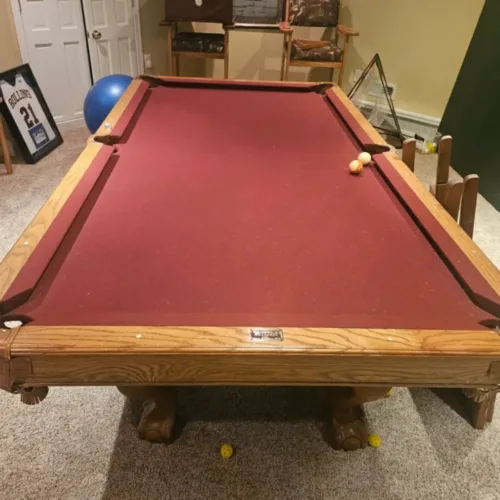
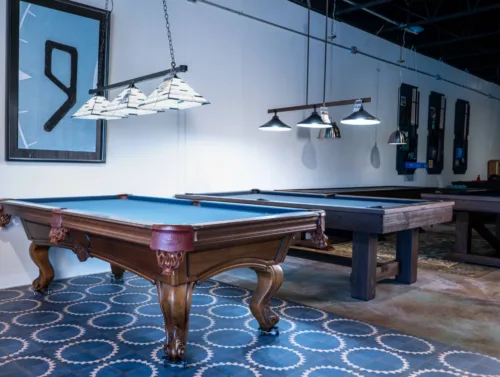
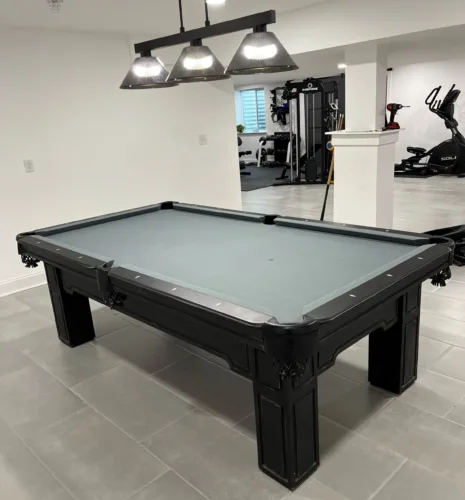
Yes, and it’s one of the most common layouts we deliver — a pool table needs a clear swing radius around the rails, so arcade cabinets and skee-ball typically line the walls around it rather than sitting in the middle of the room. Planning the pool table’s placement first usually makes the rest of the layout fall into place.
Let Our Crew Help You Get the Layout Right
We’ve been helping Delaware Valley families plan game rooms since 1982, and the questions rarely change — what fits, what holds up, and who’s going to set it all up. Our in-house delivery and installation crew handles the heavy lifting and gets every machine running before we leave, whether it’s a single cabinet or a full room of games, and everything we carry is also available to browse and shop online.
Seeing the cabinets in person is the easiest way to judge size and feel before you commit, so stop by our 7,000 sq ft showroom in Colmar, located at 515 Bethlehem Pike, Colmar, PA 18915, to see arcade cabinets, skee-ball, and pinball up close. And if you’re still working out what will actually fit your space, reach out to our team — we’re happy to talk through the layout with you before you buy anything.